
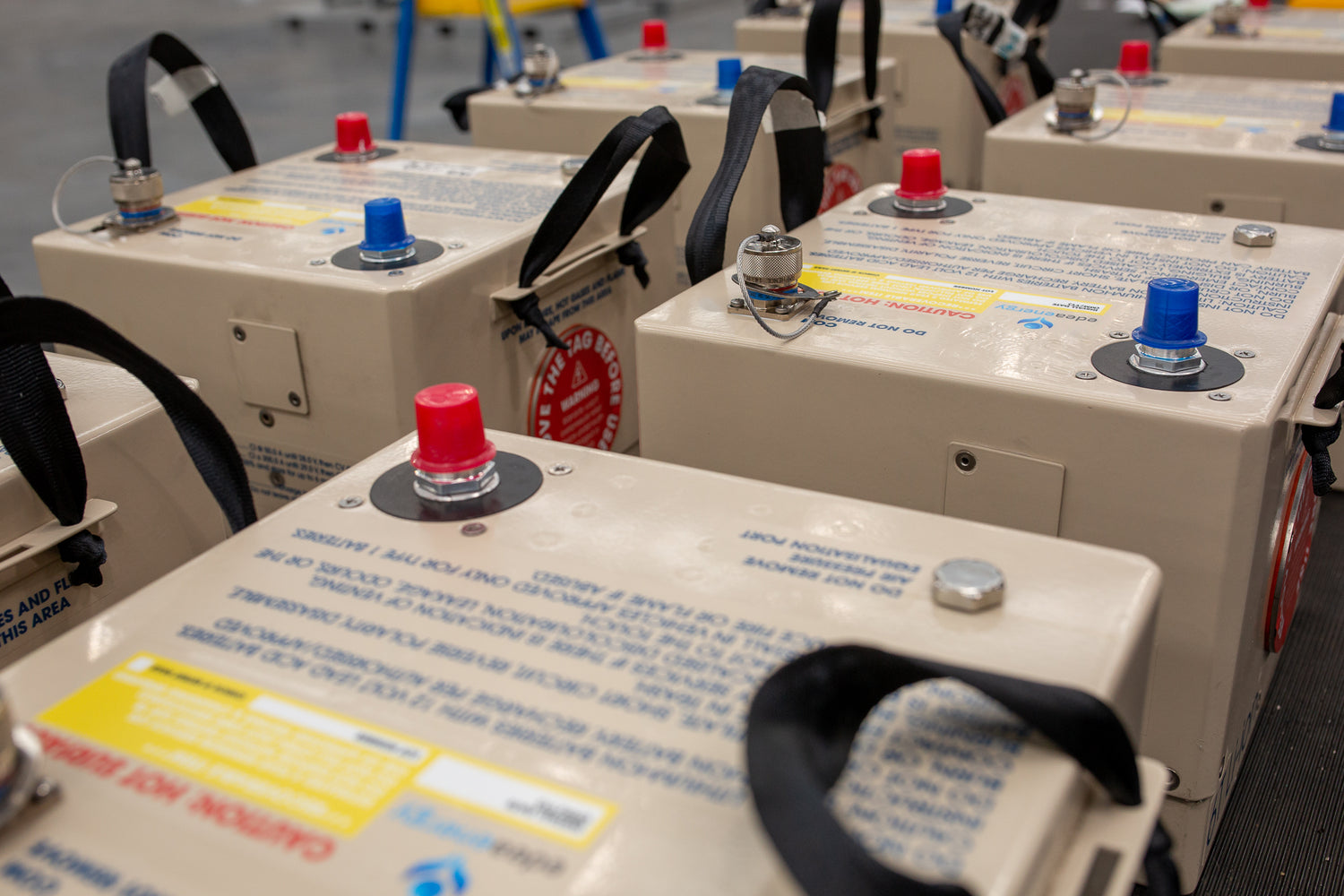


A new generation of 6T battery capability
The Gen3 super6T represents a complete redesign of the NATO 6T battery platform across mechanical, electrical, electronic, and software domains. It is engineered for military users seeking safer, more supportable, and more intelligent battery systems for land platforms, mission systems, and broader defence energy requirements.
The platform has been developed to improve durability, thermal management, field reliability, and system visibility. Across the family, Gen3 introduces vibration-damped PCB mounting, improved busbar geometry to reduce voltage sag, enhanced protection at critical junctions, lower dormant current for extended silent watch, and more capable battery management and remote-control functionality.
Built around three operational pathways
The Gen3 super6T family is structured around three distinct mission profiles
-

super6T[e] Energy Optimised
For energy endurance, silent watch, and long-duration vehicle or mission loads.
- LFP chemistry
- 25.6 V
- 100 Ah
- 2.56 kWh
- 18.4 kg
- target designation: MIL-PRF-32565C 1-A90LL
- 50 A max charge
- 100 A continuous discharge
- 300 A pulse for 60 seconds
- reduced dormant current for extended inactive storage and silent watch
-

super6T[p] Power Optimised
For high-power demand, high cranking performance, and rapid recharge.
- Toshiba SCiB LTO chemistry
- 25.3 V
- 64 Ah
- 1.6 kWh
- approximately 28 kg
- target designation: MIL-PRF-32565C 1-A60HP
- 180 A continuous charge
- 207 A continuous discharge
- 690 A pulse
- charge to 80% in 20 minutes
-

super6T[p+] Power Optimised Plus
For users seeking LTO power performance with higher capacity.
- Toshiba SCiB LTO chemistry
- 27.6 V
- 80 to 92 Ah
- 2.3 to 2.5 kWh
- 28.5 to 29.8 kg
- target designation: MIL-PRF-32565C 2-A75
- 75 A continuous charge
- 150 A continuous discharge
- 600 A pulse
- ultra-fast charging architecture with 4P configuration (80% in six minutes)


Why Gen3 is different
Gen3 is not an incremental update. It is a ground-up redesign intended to improve durability, safety, control, and operational usability across the platform family.
Key improvements across the Gen3 architecture include:
- vibration-damped PCB mounting
- anti-chafe and dielectric reinforcement at critical locations
- optimised busbar design to reduce voltage sag
- improved thermal management
- enhanced fault monitoring and isolation pathways
- lower dormant current to support extended silent watch
- deeper telemetry and remote command functionality through the BMS
Across the family, the platform is designed for MIL-STD-810H environmental ruggedisation, MIL-STD-1275E vehicle power bus compatibility, and MIL-STD-461G EMC design targets, with formal MIL-PRF-32565 certification still in progress by variant.
Advanced battery intelligence and control
The Gen3 super6T platform is built around a more capable battery management and control environment designed for defence users who need greater visibility, safer control, and better lifecycle support.
Across the platform family, core control and communications features include:
- continuous telemetry for voltage, current, temperature, SOC, SOH, and available power
- dual CAN channels for redundancy
- secure boot and encrypted firmware update pathways
- event and fault logging
- deep sleep modes for storage and transport
- CAN-commanded power-state transitions
- authorised remote commands including battle override, heater control, maintenance mode, power management, and parameter adjustment
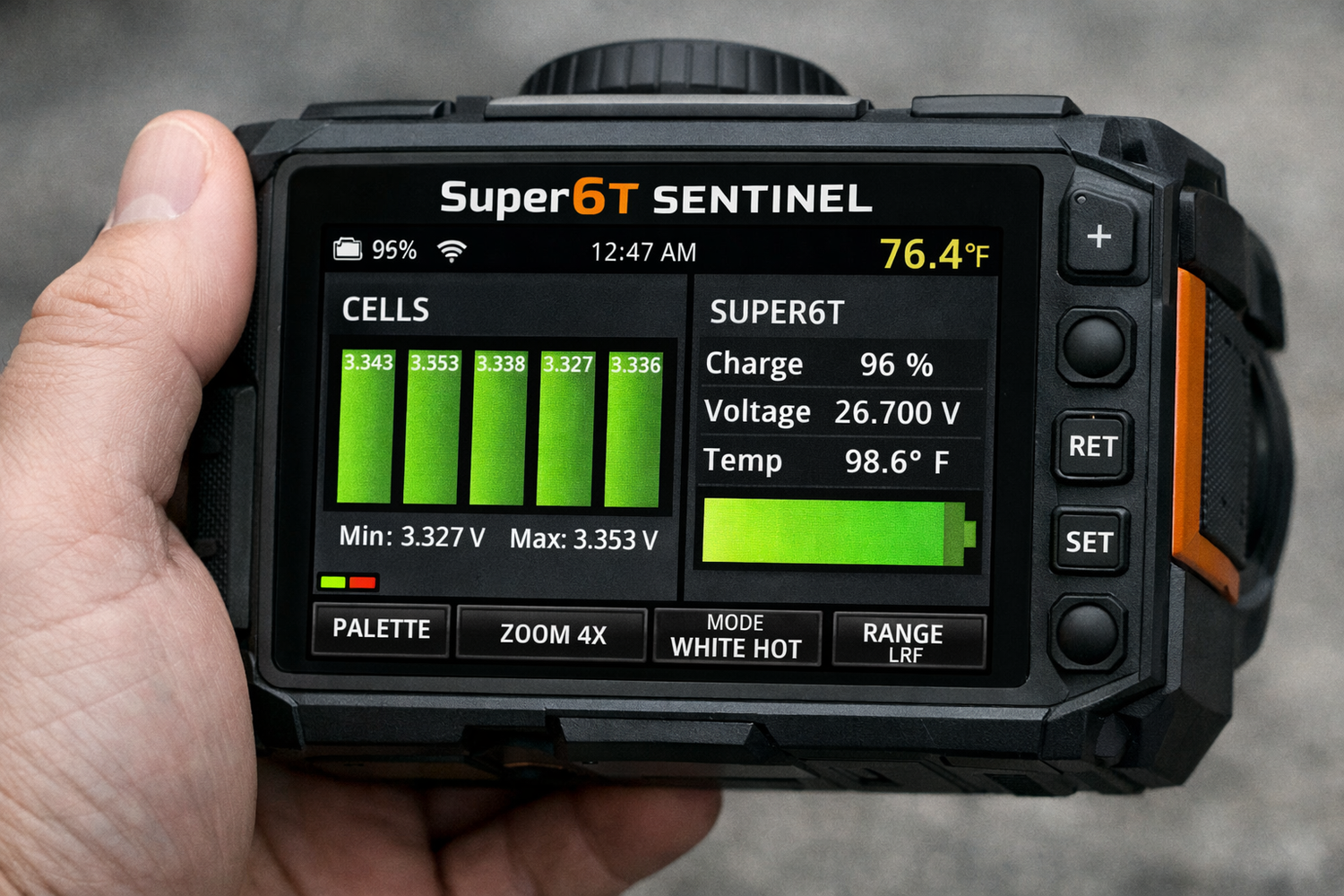
Sentinel, direct visibility for engineers and evaluators
Accompanying the Gen3 super6T family is Sentinel, a proprietary handheld evaluation and qualification system designed to give engineers, trial teams, and technical users direct access to battery telemetry and control functions.
Sentinel provides:
- real-time visibility of battery state and telemetry
- direct control over power states and configuration pathways
- support for heater activation, maintenance functions, and parameter adjustment
- event logging and performance record-building during evaluation
- an integrated web service accessible through a standard browser for remote data analysis and logging
This gives distributed evaluation teams a practical way to monitor, assess, and manage battery behaviour during testing and qualification without relying entirely on third-party instrumentation.

Designed for harsh defence environments
The Gen3 super6T family is designed for demanding vehicle and operational environments where fire safety, shock, vibration, cold-start performance, and maintainability matter.
The variant-level design targets and features include:
- fire resistance to 500°C exposure
- 7.62 mm penetration testing
- cold-start support to -18°C, with pre-heat supported to -48°C on the LTO variants
- integrated heaters controlled by the BMS
- accelerometer-assisted shock or event logging
- non-propagating failure behaviour in tested abuse scenarios
Certification position
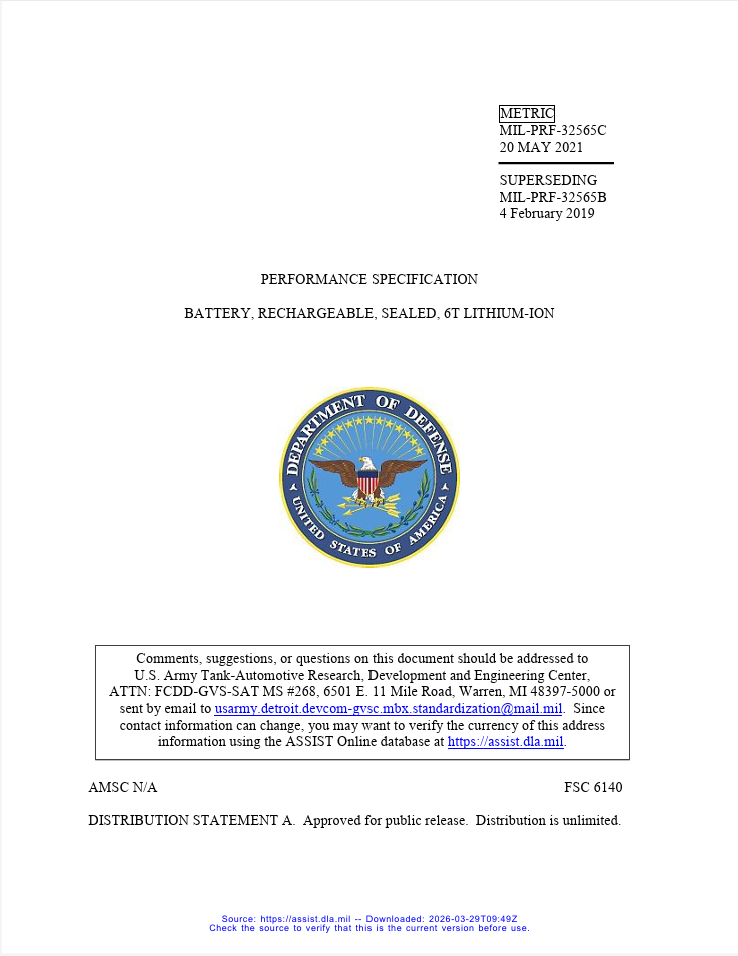
The Gen3 super6T family is being positioned against relevant military, transport, EMC, and environmental requirements, with qualification progressing across the platform family.
Each variant is presented with a target MIL designation and design intent aligned to standards including MIL-PRF-32565C, MIL-STD-1275E, and MIL-STD-461G. Cell-level certifications are already in place for relevant chemistries, while broader battery-level and system-level qualification continues across the programme.
Part of a broader assured defence energy pathway
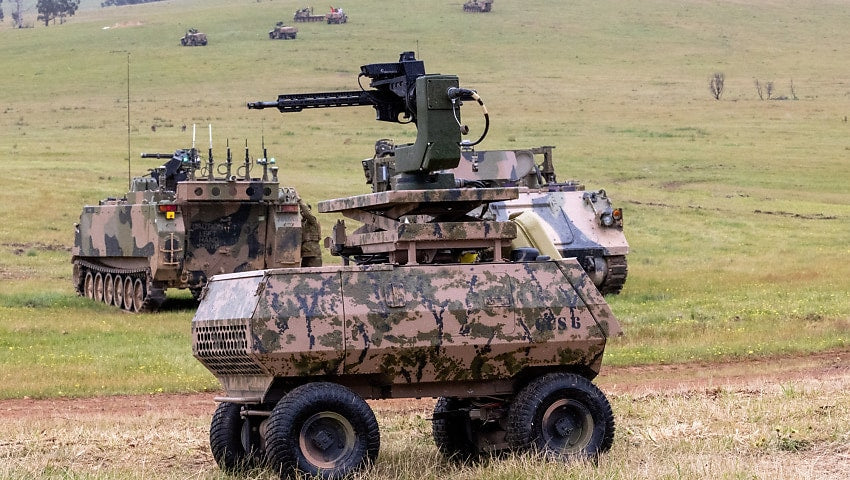
The super6T family sits within EDEA’s broader defence energy model, combining trusted cell supply, system integration, cyber-secure battery intelligence, QA, traceability, and practical local assembly pathways where required. The EDEA super6T is relevant to Western defence vehicles, support systems, and modernisation programs where safety, interoperability, assured access, and long-term supportability are essential
A supportable 6T platform for modern military needs
The Gen3 super6T family is designed to give defence users a safer, more intelligent, and more supportable pathway for vehicle and mission energy. By combining variant-specific performance options with advanced telemetry, remote command functionality, and sovereign integration pathways, EDEA is building a modern 6T platform aligned to operational reality.

